
So, you’re thinking about sprucing up your kitchen or maybe even starting a full-on renovation? That’s exciting! But before you get too carried away with shiny new gadgets and fancy tiles, let’s chat about some common kitchen fitting mistakes that can really put a dampener on things. It’s easy to get caught up in the excitement, but a little bit of planning goes a long way to avoid headaches later. We’ll go through some of the usual suspects so you can dodge those kitchen fitting mistakes and end up with a space you absolutely love.
Key Takeaways
- Don’t just pick cabinet sizes that look good; make sure they actually fit your space properly. Gaps at the top or sides can look a bit odd and collect dust.
- When choosing worktops, think about how you actually use your kitchen. Pretty is nice, but can it handle your cooking habits without staining or scratching easily?
- Plan your kitchen’s layout so you can move around freely. Cramped spaces make cooking a chore, and you don’t want doors banging into each other.
- Think about all the different kinds of light you need – general, task, and mood lighting. Don’t just rely on one overhead light; it can leave dark spots.
- Measure everything, from big appliances to small ones like microwaves. Make sure they fit where you want them without blocking doors or making the counters cluttered.
Cabinetry Considerations
When you’re planning your kitchen, the cabinets are a pretty big deal, right? They hold all your stuff and really set the tone for the whole room. But, it’s super easy to mess this part up if you’re not careful. Let’s chat about some common cabinet pitfalls to sidestep.
This sounds obvious, but you’d be surprised how often people get this wrong. It’s not just about the width and height; it’s about how they fit into your actual space. Think about how much room you have before you even look at cabinet styles. Are you going for standard sizes, or do you need something custom? If you’ve got a funny nook or a sloping ceiling, standard cabinets might leave awkward gaps or just look a bit out of place. It’s worth measuring up properly, or even getting a professional to do it, to avoid that ‘nearly right’ look. For example, if you’re fitting cabinets under a window, you need to make sure the window sill doesn’t get in the way when you open them. It’s also about making sure they don’t stick out too far into the room, especially if you have a smaller kitchen. You don’t want to be constantly bumping into them!
Okay, so the idea here is to maximise storage, which is great. But, pushing your cabinets right up to the ceiling isn’t always the best look or the most practical. While it does give you more space for things you don’t use every day, it can make your kitchen feel a bit closed in, especially if you have lower ceilings. Plus, reaching those top shelves can be a real challenge – you’ll probably need a step stool handy all the time. Sometimes, leaving a small gap at the top can actually make the room feel bigger and airier. It’s a trade-off between storage and the overall feel of the space. If you do go for ceiling-height cabinets, consider using them for lighter, less frequently accessed items.
Drawers are fantastic, aren’t they? So much better than rummaging around in the back of a deep cupboard. But, if you just have a big empty drawer, it can quickly become a jumbled mess. Investing in drawer organisers is a game-changer. Think about what you’ll be storing in each drawer. Pots and pans might need deeper dividers, while cutlery and utensils will benefit from specific trays. Pull-out shelves and lazy Susans in deeper cabinets are also brilliant for making sure you can actually get to what you need without emptying the whole thing. It’s all about making your kitchen work for you, and good organisation is key to that. It really helps when you’re trying to get dinner on the table quickly.
Planning your cabinet layout carefully is key. You need to avoid doors and drawers clashing with each other or blocking access to other parts of the kitchen. Checking clearances before installation can save a lot of headaches later on.
Here are a few ideas for drawer organisation:
- Cutlery Trays: Simple but effective for keeping forks, knives, and spoons tidy.
- Adjustable Dividers: Great for larger drawers, allowing you to customise sections for different items like pots, pans, or food containers.
- Spice Racks: Pull-out or tiered spice racks can fit neatly into drawers, keeping your spices organised and visible.
- Utensil Organisers: Specific inserts designed to hold spatulas, whisks, and other cooking tools.
Countertop Choices
Right then, let’s talk about countertops. This is where a lot of people trip up, honestly. You see something that looks amazing in a magazine, all shiny and glamorous, and you just have to have it. But then, a few months down the line, you’re scrubbing away at a red wine stain that just won’t budge, or you’re wincing every time you put a hot pan down. It’s all about finding that sweet spot between looking good and actually working for you.
Appearance Over Functionality
This is a big one. We’ve all been tempted by those super-glossy finishes or those faux marble patterns that look a bit… well, fake up close. The problem is, these often don’t stand the test of time. They can scratch easily, stain readily, or just start to look a bit tired pretty quickly. Think about how you actually use your kitchen. Are you a whirlwind of activity, constantly chopping, stirring, and spilling? Or is it more of a gentle affair? Your countertop needs to keep up. Don’t let a fleeting trend dictate a surface you’ll be living with for years. It’s worth looking at materials that are known for their durability, even if they aren’t the flashiest option straight off the bat. Sometimes, a slightly more understated look is a much smarter long-term choice. You can always add pops of colour and style with accessories, but the worktops are a major investment.
Awkward Seam Placement
Now, this might sound a bit technical, but it’s super important, especially if you have a larger kitchen. Most countertop materials come in standard slab sizes, usually around 10 feet long. If your kitchen runs longer than that, you’re going to have seams. The trick is to plan where these seams will go. A well-placed seam is practically invisible, often hidden behind a sink, under a hob, or tucked away in a corner. A poorly placed seam, however, can be a real eyesore, running right across your main prep area or in a very visible spot. It’s worth having a chat with your installer about how they plan to minimise these. It makes a surprising difference to the overall finish.
Matching Material to Cooking Habits
This is where we get practical. Think about your inner chef. Are you someone who loves to experiment, chop mountains of vegetables, and maybe occasionally forget to use a trivet? If so, you’ll want something robust. Materials like quartz or granite are brilliant because they can handle a bit of rough and tumble – think heat resistance and stain resilience. They’re pretty forgiving. On the flip side, if your cooking is more about assembling than intense prep, or you’re very careful, you might be okay with something a bit more delicate, like a natural wood butcher block. It looks lovely, but it does need more looking after. It’s about being honest with yourself about your kitchen habits.
Here’s a quick rundown:
- Heavy Use / Messy Cooks: Quartz, Granite, Solid Surface
- Moderate Use / Careful Cooks: Laminate, Butcher Block (with sealing)
- Light Use / Mostly Assembly: Some natural stones (require sealing), Laminate
Don’t get swayed by looks alone. A countertop that looks stunning but can’t handle your daily routine will quickly become a source of frustration. Consider the long-term wear and tear and how much maintenance you’re willing to do. It’s a balance, always a balance.
Layout and Workflow
When you’re planning your kitchen, it’s easy to get caught up in how nice the new cabinets will look or what colour tiles to pick. But if the layout isn’t right, you’ll be bumping into things and feeling frustrated every time you cook. Getting the flow of your kitchen sorted is just as important as the aesthetics.
Restricted Floor Space
Ever walked into a kitchen and immediately felt like you were in the way? That’s usually down to not enough circulation space. You need room to move, open doors, and generally just exist without feeling like you’re in a game of Tetris. Trying to squeeze in an island when there isn’t quite enough space is a classic mistake. It looks great in magazines, but in reality, it can make your kitchen feel smaller and harder to use.
- Aim for at least 90cm (36 inches) of clear walkway space. If you can stretch that to 100-120cm (40-48 inches), even better, especially if your kitchen is a thoroughfare or you have people often in there with you.
- Consider appliance doors. Make sure your fridge, oven, and dishwasher doors can open fully without hitting anything or blocking a main path.
- Think about traffic flow. If two people are often in the kitchen at once, you need enough space for them to pass each other comfortably.
Don’t underestimate the power of a well-planned layout. Even a small kitchen can feel spacious and work brilliantly if you’ve thought about how you’ll actually use the space.
Poor Workflow Planning
This is all about how you move around your kitchen when you’re doing things. The classic ‘work triangle’ – sink, hob, and fridge – is still a good starting point. If these are miles apart, you’ll be doing a lot of unnecessary walking. Imagine prepping veg at one end of the kitchen, then having to walk across to the hob to cook it, and then over to the sink to wash up. It’s inefficient and frankly, a bit annoying.
Here’s how to think about your workflow:
- Prep Zone: Have your main chopping area near the sink and bins, with easy access to your knives and utensils.
- Cooking Zone: Keep your hob and oven close together, with nearby storage for oils, spices, and pans.
- Cleaning Zone: The sink and dishwasher should be neighbours, with space for drying racks or draining boards.
Appliance Placement Issues
This ties into both space and workflow. Putting the dishwasher right next to the fridge, for example, isn’t ideal. The heat from the fridge can make the dishwasher work harder, and it just feels a bit awkward. Similarly, placing the bin right under the main prep area can be a bit of a pain. Think about how you use your appliances and group them logically. For instance, having your microwave near your prep area or kettle near where you store mugs and tea makes everyday tasks much smoother. If you’re looking for some professional help with your kitchen fitting, SCR Property Services have a great reputation for handyman services in Plymouth & Devon SCR Property Services.
Lighting and Aesthetics
When you’re planning your kitchen, it’s easy to get caught up in the big stuff like cabinets and countertops. But don’t forget about the lighting and how the whole place looks! Getting this wrong can make even the most expensive kitchen feel a bit off. Good lighting is just as important as good workflow.
Inadequate Lighting Placement
This is a big one. You might have the fanciest worktops and the sleekest cabinets, but if you can’t see what you’re doing, it’s a nightmare. Think about where you actually do things in the kitchen – chopping veg, reading recipes, washing up. You need light right there. Often, people put lights directly overhead or behind them, which just casts shadows on your workspace. It’s much better to have lights positioned slightly in front of you. This way, you’re not working in your own shadow. Also, consider different types of lighting. You need general light for the whole room (ambient), focused light for tasks (task lighting), and maybe some decorative light to show off nice features (accent lighting). Layering these different types makes a huge difference.
Excessive Use of Colour
While a bright, colourful kitchen might sound fun, it can quickly start to look dated. Trends come and go, and what looks amazing now might feel a bit much in a few years. It’s often safer to stick with more neutral colours for the main parts of your kitchen, like cabinets and appliances. You can always add pops of colour with accessories or a feature wall if you fancy a change later on. This approach tends to give your kitchen a longer lifespan in terms of style.
Failing to Plan for Backsplashes
The backsplash is more than just a bit of protection for your wall; it’s a real design element. It can tie the whole kitchen together or be a standout feature. If you leave planning your backsplash until the very end, you might find yourself rushing into a decision or settling for something that doesn’t quite fit. It’s worth thinking about the material, the colour, and how much of the wall you want it to cover right from the start. This gives you time to find something you really love and that complements your kitchen design perfectly.
Appliance Integration
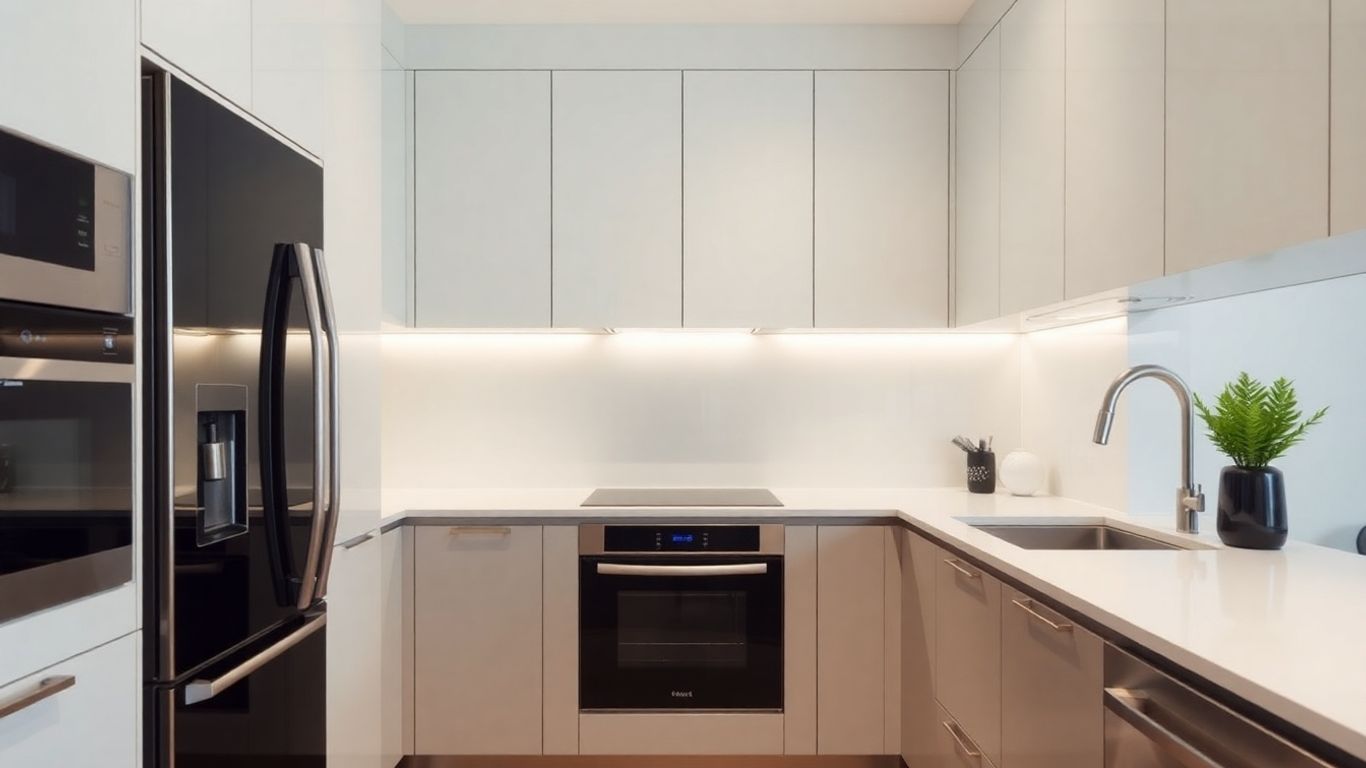
When you’re planning your new kitchen, it’s easy to get caught up in the shiny new cabinets and beautiful worktops. But don’t forget about the appliances! They’re the heart of the kitchen, after all. Getting appliance integration right from the start can save you a world of hassle later on.
Not Measuring Appliances
This might sound obvious, but you’d be surprised how many people skip this step. It’s not just about the main box of the appliance; think about handles, doors that swing open, and even the space needed for ventilation. A fridge door that won’t open fully because it hits a wall or cabinet is incredibly annoying. Similarly, an oven door that sticks out too far can be a real hazard. Always check the full dimensions, including any protrusions, and factor in the clearance needed for opening. It’s worth picking your appliances early in the design process so you can build the kitchen around them, rather than trying to force them into a pre-planned space. This often leads to a much neater, more cohesive look.
Forgetting Small Appliance Storage
We all have them – the blender, the toaster, the food processor. If you don’t plan a dedicated spot for these, they tend to end up cluttering your worktops. This makes cleaning harder and just makes the whole kitchen feel a bit chaotic. Think about pull-out shelves in lower cabinets or dedicated cupboards. Some people even opt for appliance garages, which are essentially small cupboards with lift-up doors. It keeps things tidy and out of sight when not in use. Consider how often you use each item when deciding where to store it. The kettle might need to be easily accessible, while the stand mixer might be fine tucked away.
Considering Appliance Doors
This ties back into the measuring point, but it’s worth a special mention. Appliance doors, especially on things like dishwashers and ovens, need space to open fully. You don’t want a dishwasher door clashing with a cabinet door or a drawer. Also, think about the type of door. Some ovens have doors that swing out to the side, while others have doors that drop down. This can affect how you stand in front of the appliance and how you access it. If you’re having a kitchen island, make sure the appliance doors won’t block pathways when open. It’s all about making sure you can use your kitchen comfortably without bumping into things. For professional help with installations and ensuring everything is connected safely, consider looking into local plumbing and electrical services like SCR Property Services.
Planning for appliances isn’t just about fitting them in; it’s about making sure you can use your kitchen efficiently and safely every day. Small details like door swing and ventilation can make a big difference to your daily experience.
Functional Details
Right, let’s talk about the bits and bobs that often get overlooked when you’re busy dreaming about shiny new cabinets and fancy countertops. These are the small things, the functional details, that can make or break your kitchen experience. Get these wrong, and you might find yourself a bit frustrated on a daily basis.
Forgetting Soft-Close Mechanisms
Honestly, the sound of a cabinet door or drawer slamming shut can be incredibly jarring, especially if it happens repeatedly. It’s a small thing, but it really grates after a while. Investing in soft-close mechanisms for all your doors and drawers is a game-changer. It adds a touch of quiet luxury and stops that jarring noise. It’s not just about being fancy; it’s about creating a more peaceful environment in what is often the busiest room in the house. Think about it – you’re probably in the kitchen multiple times a day. Do you really want to be met with a bang every time you put something away?
Inadequate Circulation Space
This is a big one, and it’s all about making sure you can actually move around your kitchen without bumping into things. It’s not just about having enough space to walk; it’s about having enough room to open doors and drawers fully, pull out chairs, and generally not feel like you’re in a game of Tetris. You need to be able to move freely between the main work zones – the fridge, the sink, and the cooker. A good rule of thumb is to aim for at least 1.2 metres of clear floor space in main thoroughfares. This might seem like a lot, but trust me, you’ll appreciate it when you’re trying to juggle hot pans or have more than one person in the kitchen.
Here’s a quick check for common circulation areas:
- Between parallel countertops or cabinets: Aim for a minimum of 1.2 metres.
- In front of appliances that open outwards (like ovens or dishwashers): Ensure there’s enough space to open them fully without blocking walkways.
- Around an island or peninsula: At least 1 metre is recommended, but 1.2 metres is better if possible.
Don’t underestimate the importance of clear pathways. A cramped kitchen can feel much smaller and more difficult to work in, no matter how beautiful it looks.
Wrong Flooring Choices
Your kitchen floor takes a beating, doesn’t it? It’s constantly being walked on, things get dropped on it, and spills are a regular occurrence. Choosing the right flooring is therefore pretty important. You want something that’s durable, easy to clean, and ideally, a bit forgiving if you drop something fragile. Materials like vinyl or linoleum are often good choices because they’re water-resistant and relatively inexpensive. Ceramic or porcelain tiles are also popular, but be mindful of grout lines, which can be a pain to keep clean. If you’re going for wood, make sure it’s properly sealed and consider engineered wood for better stability in a kitchen environment. You might want to explore kitchen interior design for more ideas on materials that balance looks and practicality.
In our Functional Details section, you’ll find all the specifics about how we get the job done. We cover everything from fixing leaky taps to giving your rooms a fresh coat of paint. It’s all about making sure your home is in tip-top shape. Want to see our full range of skills? Visit our website to explore all the services we offer and get a quote today!
So, What’s the Takeaway?
Right then, that’s a fair few things to keep in mind when you’re thinking about a new kitchen, isn’t it? It can all seem a bit much, but honestly, a bit of forethought goes a long way. Don’t just rush into things because you’re excited about new shiny cupboards. Take a moment, measure twice, and really think about how you actually use your kitchen day-to-day. Whether it’s making sure there’s enough room to swing a cat, or picking a worktop that won’t get ruined by your morning cuppa, these little details really do make all the difference. Get it right, and you’ll have a kitchen you love for years to come. Get it wrong, and well, you might just end up with a bit of a headache – and a kitchen that doesn’t quite work for you. Happy renovating!
Frequently Asked Questions
What’s the biggest mistake people make with kitchen cabinets?
Loads of people forget to think about the size of their cabinets or how they’ll actually fit in the space. It’s super important to measure everything up properly, otherwise, you might end up with cabinets that stick out too much or don’t quite fit, making your kitchen feel cramped and awkward. Also, a common slip-up is not extending cabinets all the way to the ceiling. This leaves dusty gaps and can make the kitchen look unfinished. It’s best to go right up to the ceiling for a sleek look and to avoid cleaning headaches!
Are fancy countertops always the best choice?
Not necessarily! While stunning countertops look amazing, it’s easy to get carried away with looks and forget about how practical they are. For example, a super-white marble might look gorgeous, but if you’re a messy cook or have kids, it could get stained really easily. Think about your lifestyle – if you’re always cooking up a storm, you’ll want something tough like granite or quartz. If you’re more of a casual cook, you might be fine with something else. Also, where they join countertops together (seams) can be a bit of an eyesore if not planned carefully.
Why is kitchen layout so important?
Getting the layout wrong is a massive headache! If you don’t leave enough room to walk around, your kitchen will feel like a sardine can, especially when more than one person is trying to use it. It can also mean you can’t properly open things like your fridge or dishwasher doors. It’s all about planning a good ‘workflow’ – basically, making sure everything you need is in a sensible place so you’re not constantly dashing back and forth across the kitchen when you’re trying to cook or clean up.
How much light do I really need in my kitchen?
It’s easy to mess up the lighting. You need more than just one big light in the middle! Think about different kinds of light: general light for the whole room, bright lights right where you’re chopping and cooking (task lighting), and maybe some softer lights to make it feel cosy. Putting lights in the wrong spot can mean you’re working in shadows, which isn’t great for cooking or cleaning. Also, going overboard with bright colours can make a kitchen look dated quickly, so neutrals are often a safer bet for the long run.
What are the common appliance blunders?
A biggie is not measuring your appliances properly before you buy your cabinets. This can lead to things sticking out awkwardly or not being able to open doors fully. Don’t forget about the smaller gadgets like blenders or microwaves either! If you don’t plan a spot for them, they’ll end up cluttering your work surfaces. It’s best to pick your appliances first and then build your kitchen around them.
Are there any small details that are often missed?
Definitely! Things like forgetting soft-close hinges on drawers and doors can be annoying – no more loud slamming! Also, make sure there’s enough space to actually walk around comfortably, especially if your kitchen is a busy thoroughfare. And don’t skimp on the flooring! Choosing something that looks nice but is slippery or hard to clean is a mistake that you’ll regret every day. Think about durability and safety, not just how it looks.